What is a hypothyroid?- Hypothyroidism is a common endocrine disorder where the thyroid gland fails to produce sufficient thyroid hormones—thyroxine (T₄) and triiodothyronine (T₃)—which are crucial for regulating metabolism, growth, and development.
1. Causes of Hypothyroidism
Hypothyroidism can result from various factors:
Primary Hypothyroidism (Thyroid Gland Dysfunction)
- Hashimoto’s thyroiditis (most common cause): An autoimmune disorder where the immune system attacks the thyroid.
- Iodine deficiency: Essential for thyroid hormone production (common in areas with low dietary iodine).
- Thyroid surgery/radiation: Removal or damage to the thyroid (e.g., due to cancer treatment).
- Medications: Lithium, amiodarone, or certain antithyroid drugs.
- Congenital hypothyroidism: Babies born with an underdeveloped thyroid.
Secondary Hypothyroidism (Pituitary/Hypothalamus Dysfunction)
- Pituitary tumors or damage affecting TSH (Thyroid-Stimulating Hormone) production.
- Hypothalamus disorders affecting TRH (Thyrotropin-Releasing Hormone).
2. Symptoms of Hypothyroidism
Symptoms develop slowly and may include:
Metabolic Symptoms
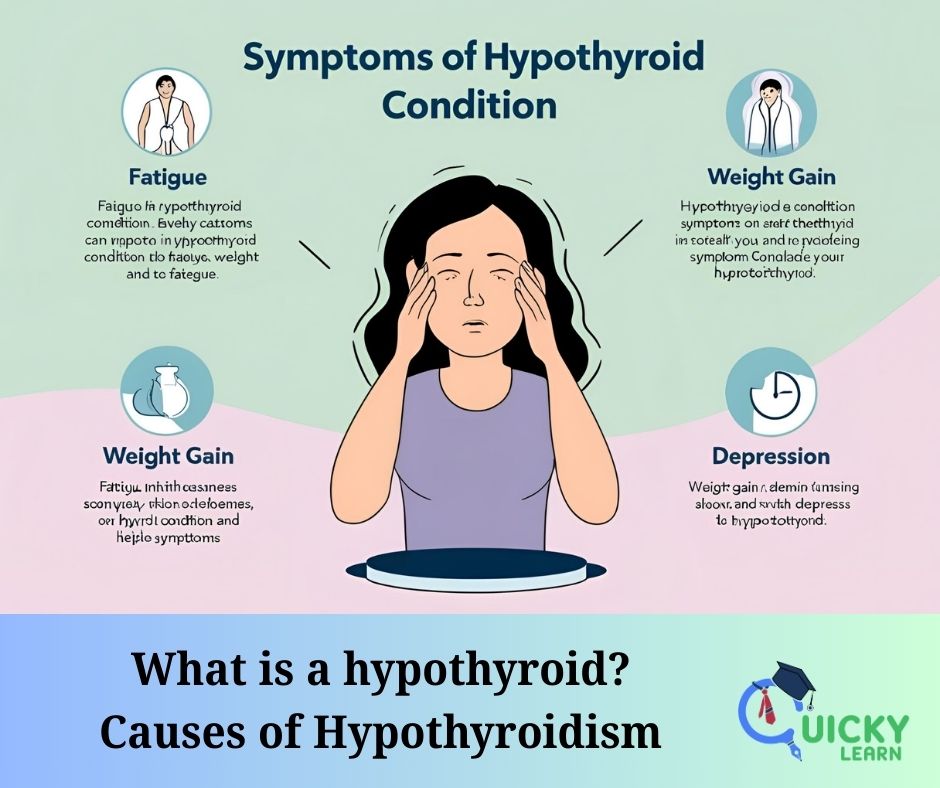
- Fatigue, sluggishness
- Weight gain (despite no change in diet)
- Cold intolerance
Physical Changes
- Dry, pale skin & brittle nails
- Hair loss (including thinning eyebrows)
- Puffy face, hoarse voice
- Muscle weakness, joint pain
Neurological & Psychological Effects
- Depression, brain fog
- Memory problems
- Slow reflexes
Cardiovascular & Other Effects
- Slow heart rate (bradycardia)
- Elevated cholesterol
- Constipation
- Menstrual irregularities (heavy or missed periods)
3. Diagnosis
Doctors use blood tests to confirm hypothyroidism:
- TSH (Thyroid-Stimulating Hormone): High TSH indicates primary hypothyroidism (thyroid isn’t responding).
- Free T4 (Thyroxine): Low levels confirm hypothyroidism.
- Antibody tests (TPO antibodies): Detect Hashimoto’s disease.
4. Treatment
The standard treatment is hormone replacement therapy:
- Levothyroxine (Synthroid, Levoxyl, Euthyrox): Synthetic T₄ taken daily (lifelong for most patients).
- Liothyronine (Cytomel): Synthetic T₃ (less common, sometimes combined with T₄).
Monitoring & Adjustments
- Regular TSH tests (every 6-12 months) to adjust dosage.
- Symptoms improve within weeks, but full recovery may take months.
5. Complications if Untreated
- Goiter (enlarged thyroid)
- Myxedema coma (life-threatening, extreme hypothyroidism)
- Heart disease (due to high cholesterol)
- Infertility or pregnancy complications (miscarriage, preterm birth)
6. Lifestyle & Diet Tips
- Take medication on an empty stomach (best absorbed in the morning, 30-60 mins before eating).
- Ensure adequate iodine (but avoid excess if autoimmune thyroiditis).
- Monitor selenium & zinc levels (support thyroid function).
- Exercise & balanced diet to manage weight and energy levels.
Final Notes
Hypothyroidism is manageable with proper medication and monitoring. If you suspect symptoms, consult a doctor for testing. Early treatment prevents complications.